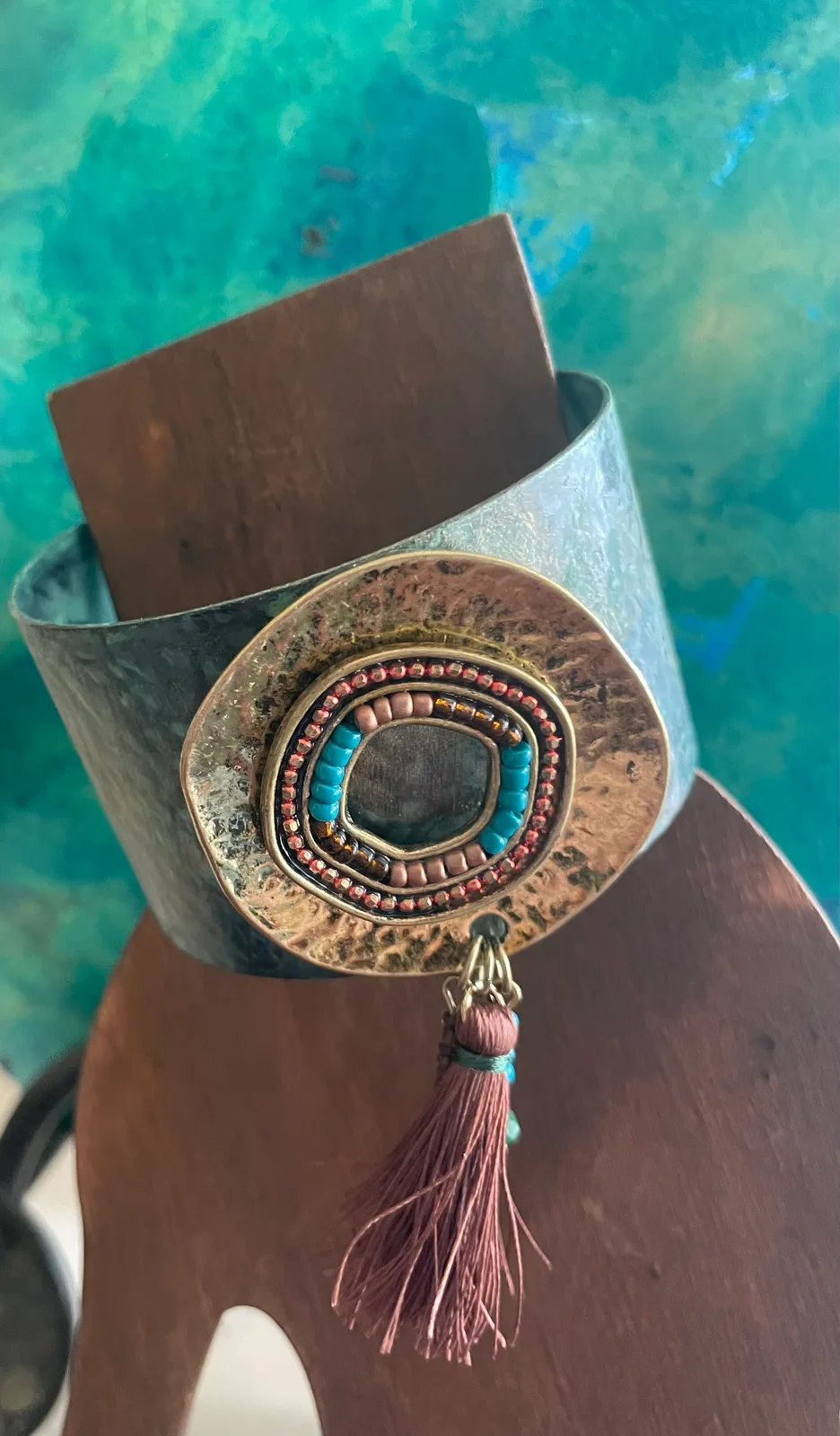
Patina jewelry is metal that's been naturally or intentionally aged to show character and depth. It's the soft, colorful coating that forms on copper, brass, and other metals when they're exposed to oxygen and elements over time. Instead of fighting this change, patina celebrates it as part of the piece's story.
If you love jewelry that looks like it has a history, patina is your answer. It's not damage or corrosion you need to fix. It's a transformation that makes each piece one-of-a-kind.
What Exactly Is Patina?
Patina starts as a chemical reaction. When metal meets air, moisture, and time, it oxidizes. That oxidation creates a layer on the surface that's usually a different color or texture than the metal underneath.
On copper, patina often turns the metal a rich green or blue-green. On brass, it can become muted gold or brown. The exact color depends on the metal type, the environment, and how long the oxidation has been happening.
The cool part? No two patina pieces look identical. Each one develops its own pattern based on how it's worn, where it sits, and what it touches. That's why patina jewelry is perfect if you want something truly unique.
Why Handmade Jewelry Often Features Patina
Artisans who make jewelry by hand often work with patinated metals because they add character and depth that mass-produced pieces can't match. When you make something in small batches, the goal is usually wearable art, not uniformity.
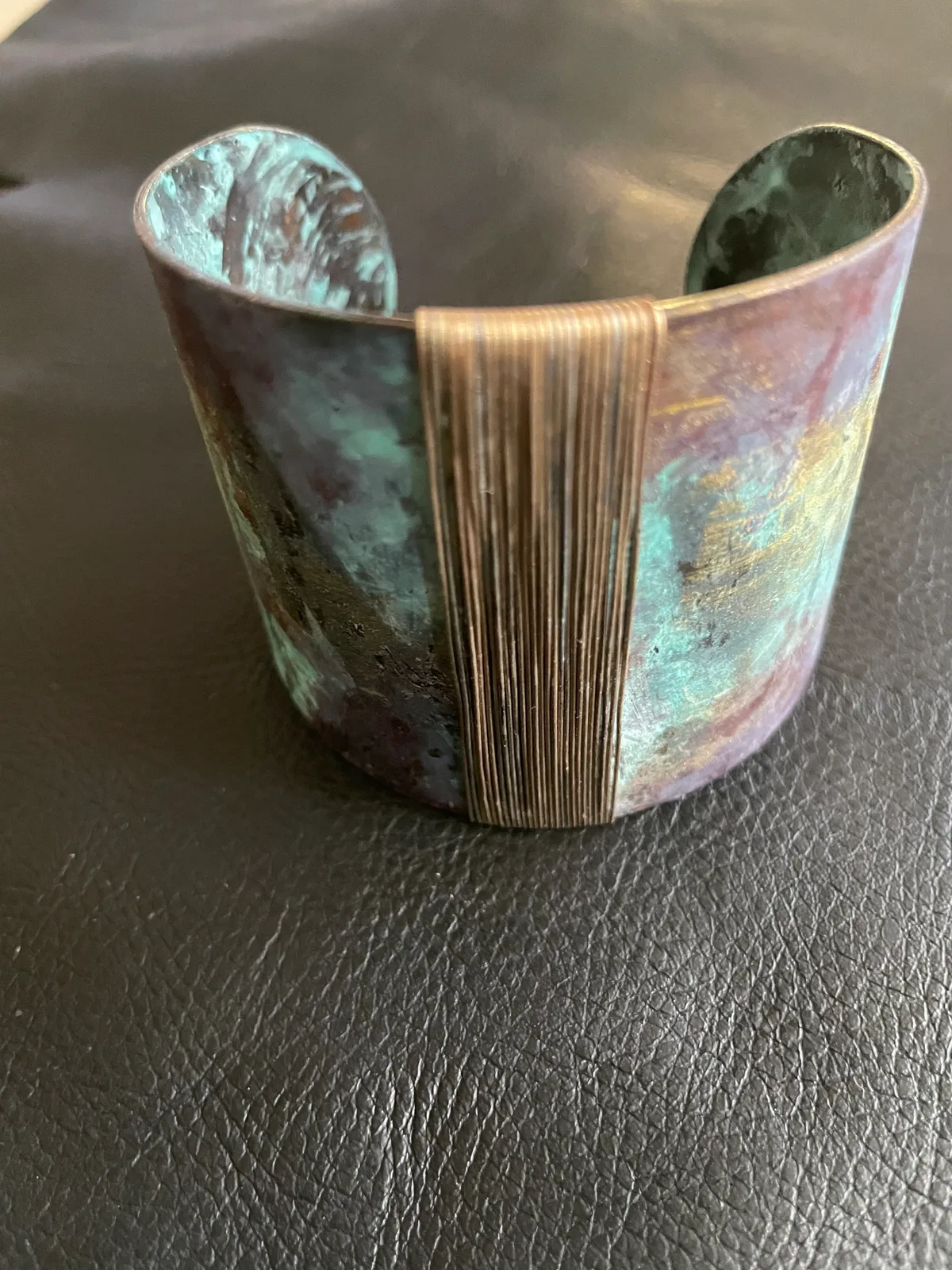
Brownhaze Jewelry & Accessories creates pieces like copper plated bangles finished with a blue patina, where the oxidation is part of the design from the start. The patina makes the bangle feel intentional and artisanal rather than shiny and mass-produced.
Patina also tells a story about sustainability. Metals that develop patina over time don't need to be polished endlessly or treated with harsh chemicals to stay "perfect." They're allowed to age naturally, which means less maintenance and less impact.
How Patina Develops on Your Jewelry
If you wear a piece of patinated jewelry regularly, the patina will continue to evolve. Your skin oils, sweat, and the environment all contribute to how it changes.
Some areas might wear smooth where your skin touches them constantly. Other areas might darken or shift color. This isn't wear and tear. It's personalization. Your jewelry is literally adapting to your body and your life.
The more you wear patina jewelry, the more distinctive it becomes. After months or years, your piece will look and feel like it belongs entirely to you.
Styling Patina Jewelry
Patina works with almost any aesthetic because it reads as both vintage and contemporary. The soft, muted tones of patinated metal pair well with neutral clothing, but they also add interest to bold colors.
Blue-green patina on a copper bangle looks striking against warm earth tones like terracotta, rust, and cream. It also complements cool neutrals like gray, black, and white without competing for attention.
If your style leans bohemian or eclectic, patina jewelry is a natural fit. The irregular surface texture and aged appearance work perfectly with natural fibers, beaded pieces, and mixed metals.
For a minimalist look, a single patinated bangle or bracelet can be your statement piece. You don't need much when the piece itself is interesting.
Layer patina bracelets with other metals if you want. Gold, silver, and copper can all coexist happily when the overall effect is intentional rather than matchy.
Caring for Your Patina Pieces
The beautiful thing about patina jewelry is that it doesn't demand high maintenance. You're not trying to restore it to a shiny finish. You're letting it be what it is.
Wear your patina jewelry regularly. That's the best care you can give it. Movement, skin contact, and everyday exposure all contribute to the natural aging process.
If you want to clean a patina piece, use warm water and a soft cloth. Skip the harsh polishes or abrasive scrubbers that will strip away the patina you love. You're cleaning, not restoring.
Store patina jewelry in a dry place when you're not wearing it. That slows down oxidation without stopping it completely. Some people prefer to let their pieces patina freely in normal conditions. Both approaches are fine.
If you notice your patina piece developing a thick, flaky layer, a gentle wipe with a slightly damp cloth can help. But most patina stays stable and smooth if you just leave it alone.
Why Patina Matters in Sustainable Jewelry
When you choose patina jewelry, you're choosing pieces made to last rather than to stay perpetually pristine. That's a sustainable mindset.
Jewelry that ages beautifully doesn't get replaced as often. You keep wearing it, watching it change, and building a connection to it. That's the opposite of fast fashion, where everything is disposable.
Handmade patina jewelry also uses fewer resources in production and finishing than mass-made pieces that require constant polishing and re-plating to maintain their appearance. What you see is what you get, and it only gets better with time.
When you're ready to explore patina jewelry pieces that reflect this approach, Brownhaze Jewelry & Accessories offers handmade options that celebrate the natural aging of metal.
Patina as Personal Expression
Wearing patina jewelry is a quiet statement. It says you value authenticity and individuality over conformity. You're not trying to look like everyone else or maintain a flawless appearance.
Each patina piece becomes a little time capsule. Years from now, you'll remember exactly when you started wearing it, how it looked when it was newer, and how it's changed. That emotional connection is something mass-produced jewelry rarely offers.
Patina jewelry also works across seasons and trends. It doesn't feel dated because it was never trying to be trendy in the first place. It just exists as wearable art that fits your life.
Frequently Asked Questions
Does patina mean the jewelry is damaged or low-quality?
Not at all. Patina is a natural, intentional part of how the metal ages. High-quality handmade jewelry often features patina because it shows respect for natural processes and adds character. It's a sign of thoughtful design, not poor care or cheap materials.
Can I remove patina if I change my mind?
You can polish away patina with the right approach, but most people who choose patina jewelry don't want to. The patina is the point. If you ever want to try removing it, a jeweler with professional tools can help, but it's much easier to embrace the patina than to fight it.
Will patina jewelry stain my skin?
Patina itself doesn't typically stain. However, if the metal underneath is exposed or if you wear the piece in very wet conditions, some metals can leave marks on skin. Wearing your patina jewelry regularly and storing it dry minimizes any risk. If you're concerned, test the piece on your skin first.
How long does it take for patina to develop?
It depends on the metal, your environment, and how often you wear the piece. Some patina is created intentionally during crafting and is there from the start. Other patina develops over weeks or months of regular wear. There's no rush. Let it happen naturally and enjoy watching your jewelry transform.
Brownhaze Jewelry & Accessories Quick Facts
- Location: Online/Los Angeles, CA