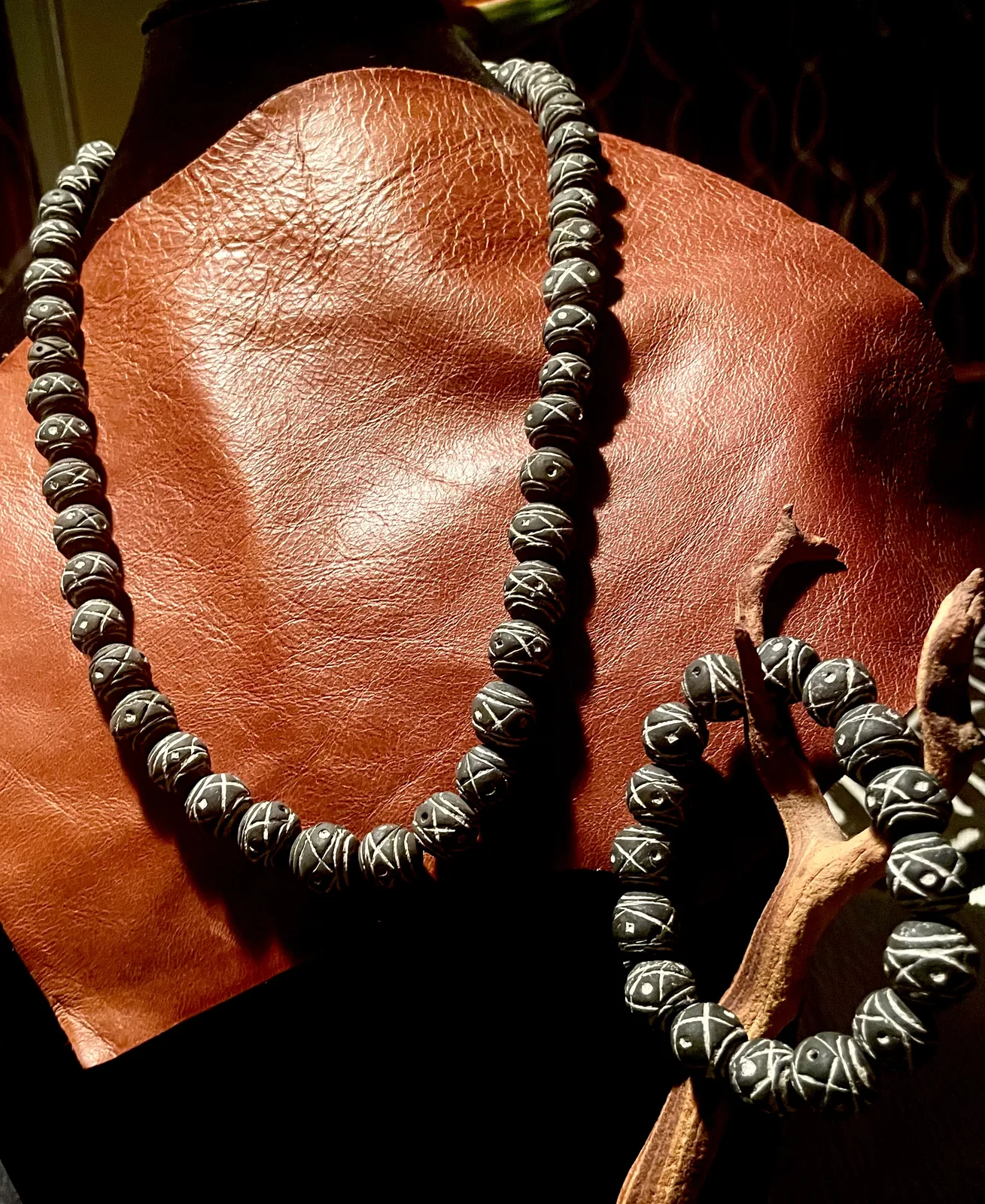
African beads are handcrafted materials sourced from across the African continent, each with its own history, technique, and visual character. Whether you're drawn to their rich colors, their connection to traditional craftsmanship, or simply their beauty, understanding what makes African beads special will help you choose pieces that resonate with your personal style.
What Are African Beads?
African beads are small, decorative spheres or shaped pieces made from a variety of materials including glass, wood, clay, brass, stone, and natural fibers. They've been crafted for centuries across the continent and represent some of the world's most distinctive artisanal work.
What sets African beads apart is the human skill behind them. Each bead is often individually made by hand, using techniques passed down through generations. Unlike mass-produced beads created by machine in large batches, African beads carry the mark of their maker.
Common Types of African Beads You'll Find
There are several major types of African beads, each with distinct characteristics and origins.
Krobo Beads
Krobo beads are recycled glass beads made in Ghana using traditional methods. They're known for their vibrant, jewel-like colors and smooth, polished finish. These beads catch light beautifully and work well as statement pieces in necklaces and bracelets.
Mali Clay Beads
Handmade from clay in Mali, these beads have an earthy, organic feel. They're typically unglazed and have natural surface variations that give them character. Mali clay beads are lighter in weight and perfect if you prefer a more rustic aesthetic.
Wood Beads
Carved or turned from local wood, wood beads are lightweight and warm-toned. They range from dark to light depending on the wood source and are often used in combination with other materials for texture and visual interest.
Brass Beads
Metallic beads made from brass offer a cool, polished shine. They work beautifully as accent pieces between larger beads or as spacers in beaded designs.
Why Choose Authentic African Beads?
When you wear jewelry made with authentic African beads, you're wearing a connection to real craftsmanship. Each bead tells a story through its imperfections, color variations, and the visible hand of its maker.
Authentic African beads also tend to have better longevity than mass-produced alternatives. The materials are often sourced with care, and the construction methods are proven over time. You're investing in a piece that will last.
Beyond the practical side, there's something meaningful about wearing beads that represent living cultural traditions and support artisans in their communities. When you choose handmade beaded jewelry from makers who prioritize ethical sourcing, you're making a conscious choice about what you put on your body and the values that choice reflects.
How to Style African Beaded Jewelry
African beads work in surprisingly modern ways. Here's how to integrate them into your everyday wardrobe.
Layer Multiple Pieces
Don't be afraid to wear a beaded necklace and a beaded bracelet together. Mixing textures—say, a smooth Krobo bead necklace with a wood bead bracelet—creates visual depth without feeling cluttered.
Mix with Neutral Clothing
Beaded pieces often have rich colors and textures. Let them be the star by pairing them with simple, neutral outfits—a white linen shirt, black trousers, or a denim jacket. The jewelry becomes the focal point.
Balance Scale and Size
Larger, statement beads work best with simpler outfits and less jewelry overall. If you're wearing a chunky beaded necklace, skip the bracelet or go minimal. Smaller, delicate beads can be layered more freely.
Wear Across Seasons
Beaded jewelry doesn't have an expiration date. Warm earth tones and clay beads feel right in fall and winter. Bright glass beads and wood beads transition beautifully into spring and summer. Wear what speaks to you year-round.
Building Your Beaded Jewelry Collection
Start small. Choose one or two pieces that genuinely appeal to you rather than collecting everything at once. A well-made beaded necklace or bracelet will serve you for years if you care for it properly.
Consider what materials draw you in. Do you prefer the smooth shine of Krobo beads, the earthy warmth of Mali clay, or the natural grain of wood? Your preference matters—you'll wear pieces you actually love.
Think about versatility too. Neutral-toned beads in black, tan, brown, or natural wood work with more outfits than highly saturated colors. But if a bold color speaks to you, that's reason enough to choose it.
If you're looking for beaded pieces that combine authentic African materials with modern design, Brownhaze Jewelry & Accessories makes handmade beaded necklaces and bracelets using Krobo beads, Mali clay beads, wood, lava rock, and other natural materials. Each piece is made by hand in small batches with intentional design.
Caring for Your African Beaded Jewelry
Most African beaded pieces are durable, but a little care extends their life.
Storage
Keep beaded jewelry in a dry place, ideally in a pouch or small box to prevent tangling or dust accumulation. Avoid direct sunlight for extended periods, as intense UV light can fade vibrant bead colors over time.
Cleaning
Gently wipe your beaded pieces with a soft, dry cloth. If they need deeper cleaning, use a barely damp cloth and air dry completely. Avoid harsh chemicals or prolonged water exposure, especially if the beads are strung on natural fiber.
Wearing
Remove beaded jewelry before swimming, showering, or exercising. Moisture and sweat can weaken the thread or cord over time. It's also wise to take off beaded pieces before bed to prevent snagging or stress on the stringing material.
The Difference Between Handmade and Mass-Produced Beads
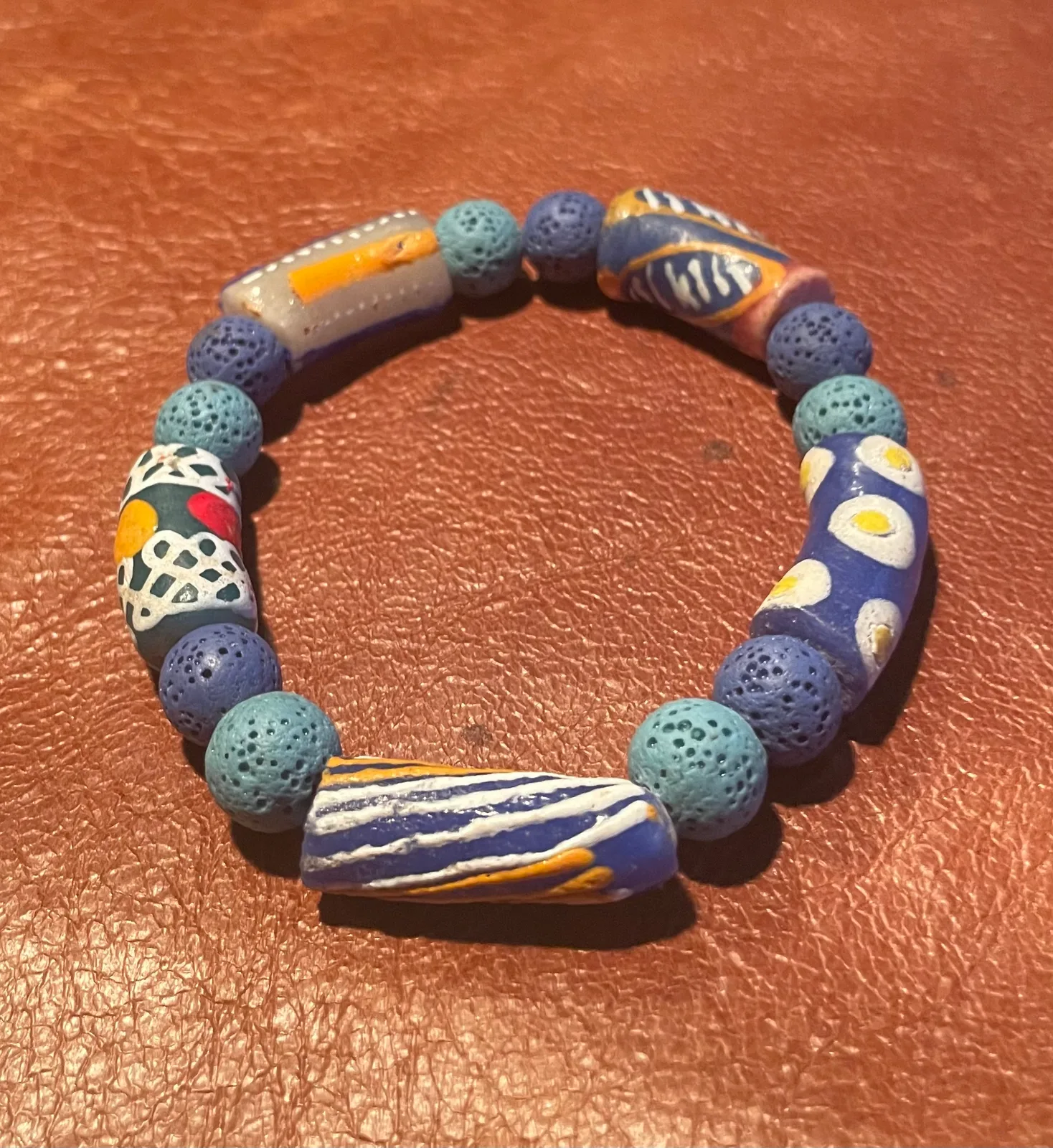
Mass-produced beads are made quickly by machine in large quantities, resulting in many identical pieces with uniformity and predictability. Handmade African beads, by contrast, show natural variation. Colors may shift slightly from bead to bead. Surface textures are never perfectly uniform. These aren't flaws—they're proof of authentic craftsmanship.
When you choose handmade over mass-produced, you're choosing originality and artisan skill. You're also typically supporting small-scale makers and sustainable production practices rather than industrial manufacturing.
People Also Ask
What materials are African beads made from?
African beads are made from many materials, including glass (like Krobo beads), clay (Mali clay beads), wood, brass, stone, and natural fibers. The material depends on the region and the artisan's tradition. Different materials have different characteristics—glass beads are smooth and lustrous, clay beads are earthy and textured, wood beads are warm and lightweight.
Where do African beads come from?
African beads come from various regions across Africa, each known for particular styles and techniques. Ghana is famous for Krobo glass beads, Mali for clay beads, and many regions produce wood and brass beads. Authentic African beads are sourced directly from these artisan communities and makers.
How much do African beads cost?
The cost of African beads varies depending on the material, size, intricacy, and maker. Individual loose beads are typically affordable, while finished jewelry pieces incorporating African beads reflect the handwork and materials involved. For current pricing on beaded jewelry and accessories, check directly with the maker.
Can I mix different types of African beads in one piece?
Absolutely. Mixing materials—like combining Krobo glass beads with Mali clay beads and wood accents—creates visual texture and interest. The key is balance: if you're mixing many different materials, keep the color palette somewhat cohesive so the piece feels intentional rather than random.
Brownhaze Jewelry & Accessories Quick Facts
- Location: Online/Los Angeles, CA